Weekly Iron Butterfly Backtest (Part 12)
Posted by Mark on July 15, 2013 at 07:54 | Last modified: August 5, 2013 13:59In this blog series, I’m backtesting the weekly option trade described here.
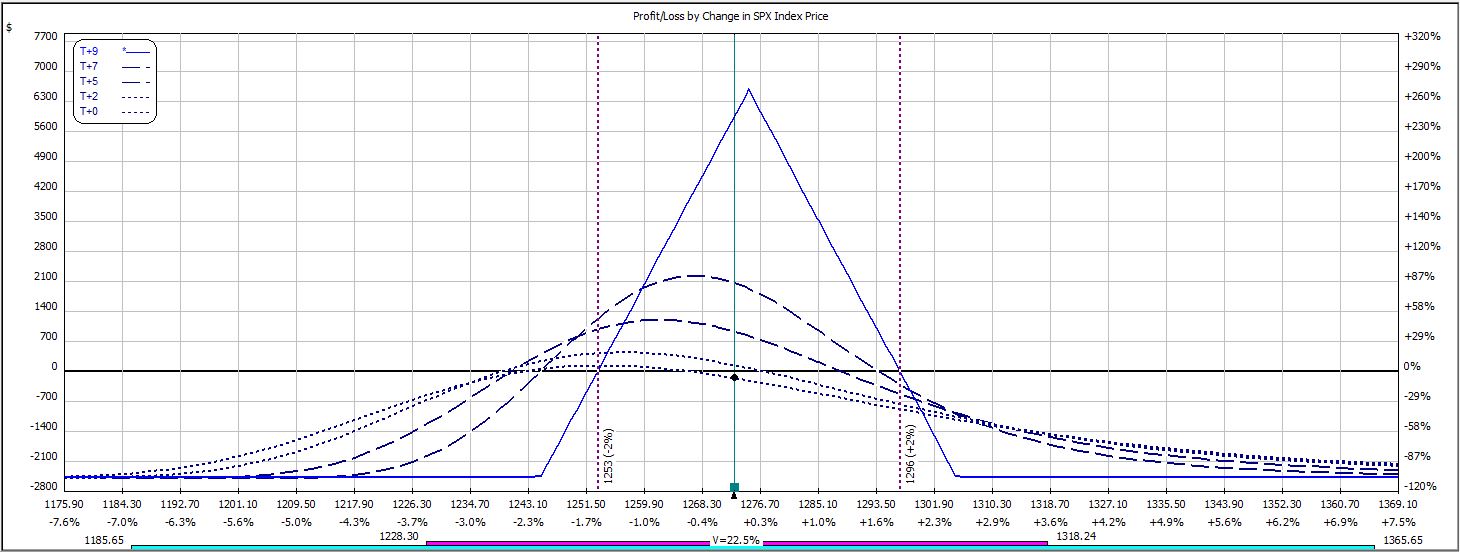
Week 11′s trade begins like this:
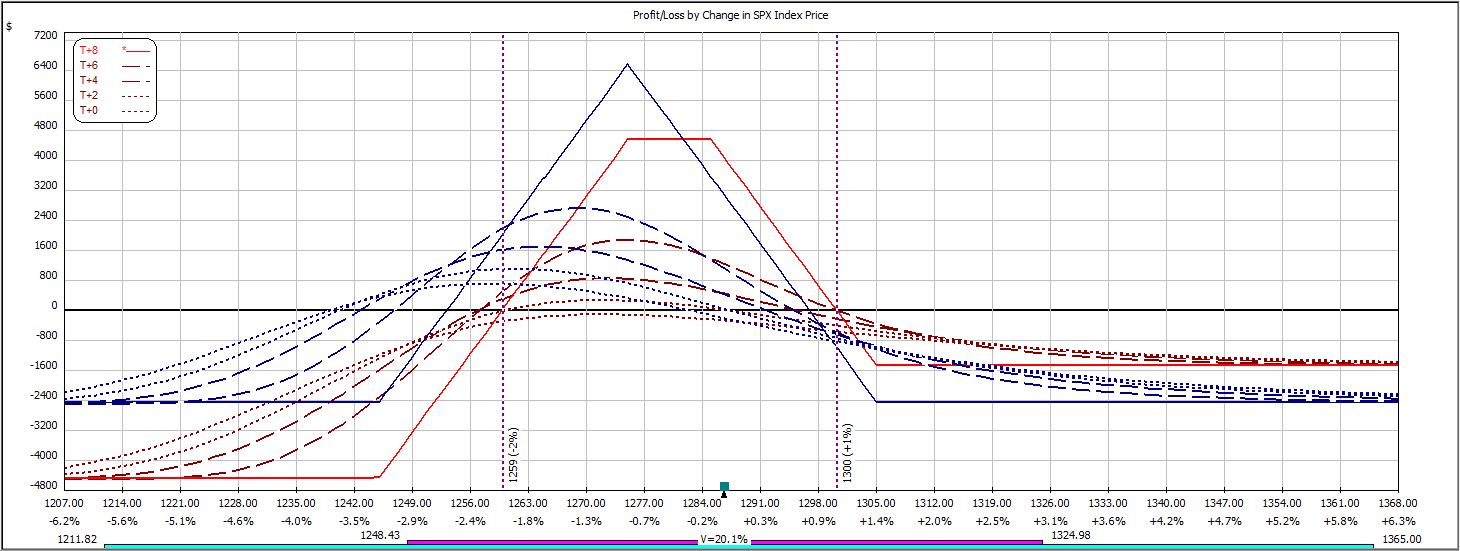
The market rallied and the next day, I rolled the short calls 10 points higher:
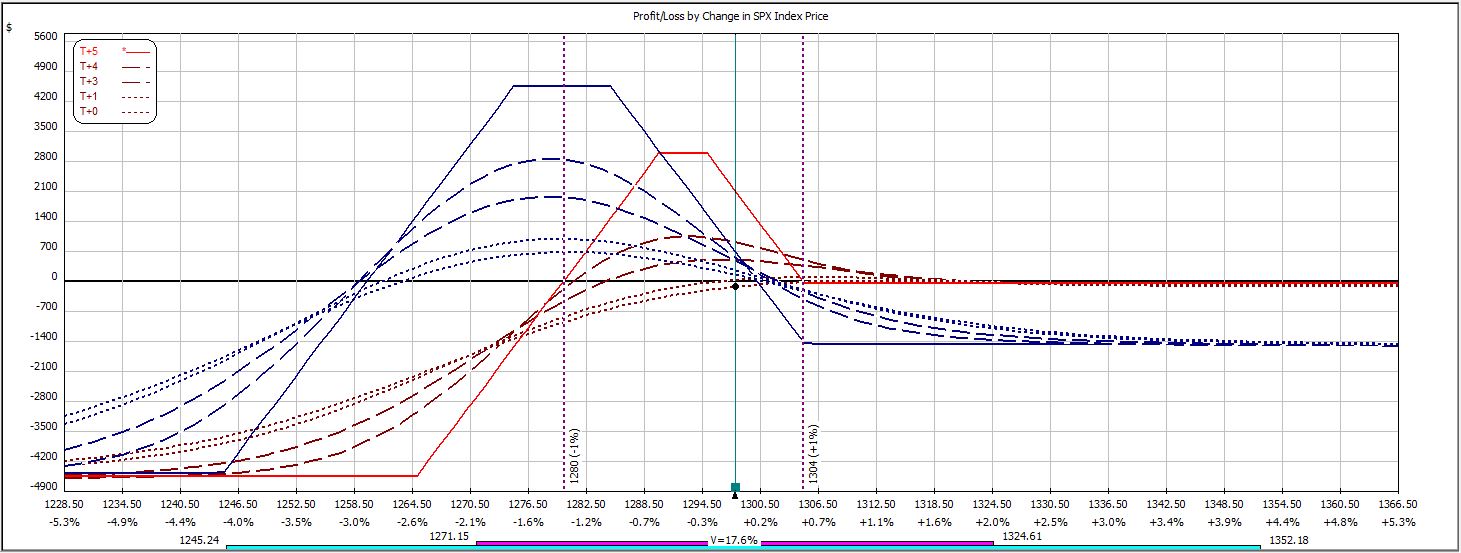
As the market continued to rally, I rolled the short calls 10 points higher on Day 5. To maintain profit potential in the trade and manage risk, I also rolled the short puts up 15 points and the long puts up 20 points:
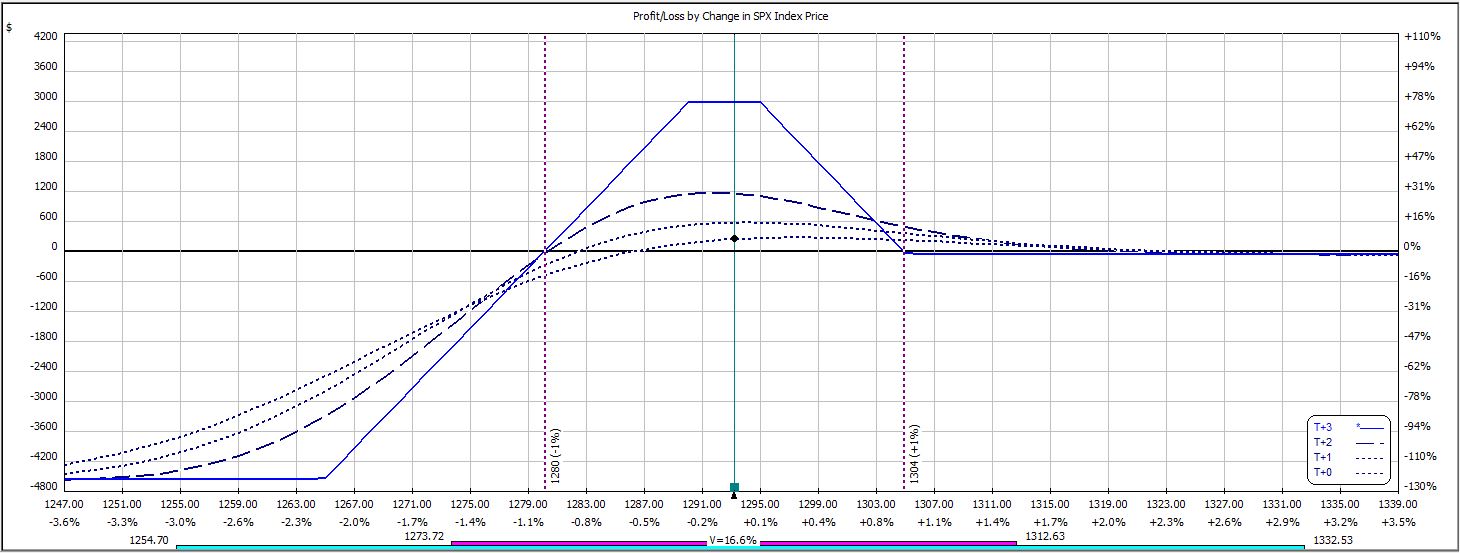
The profit target was hit two days later:
P/L ranged from -$312 to -$72 on Day 1.
P/L ranged from -$270 to -$156 on Day 2 with an adjusted margin requirement of $4,476.
On Day 5 (nothing happened over the weekend), P/L ranged from -$231 to -$129 with an adjusted margin requirement of $4,557.
P/L ranged from -$96 to -$6 on Day 6.
P/L fell as low as -$165 on Day 7 with a final return of +5.9%.
I’m a bit leery of rolling the short puts higher when the market rallies. Rolling the long puts higher clearly lowers margin requirement for minimal cost:
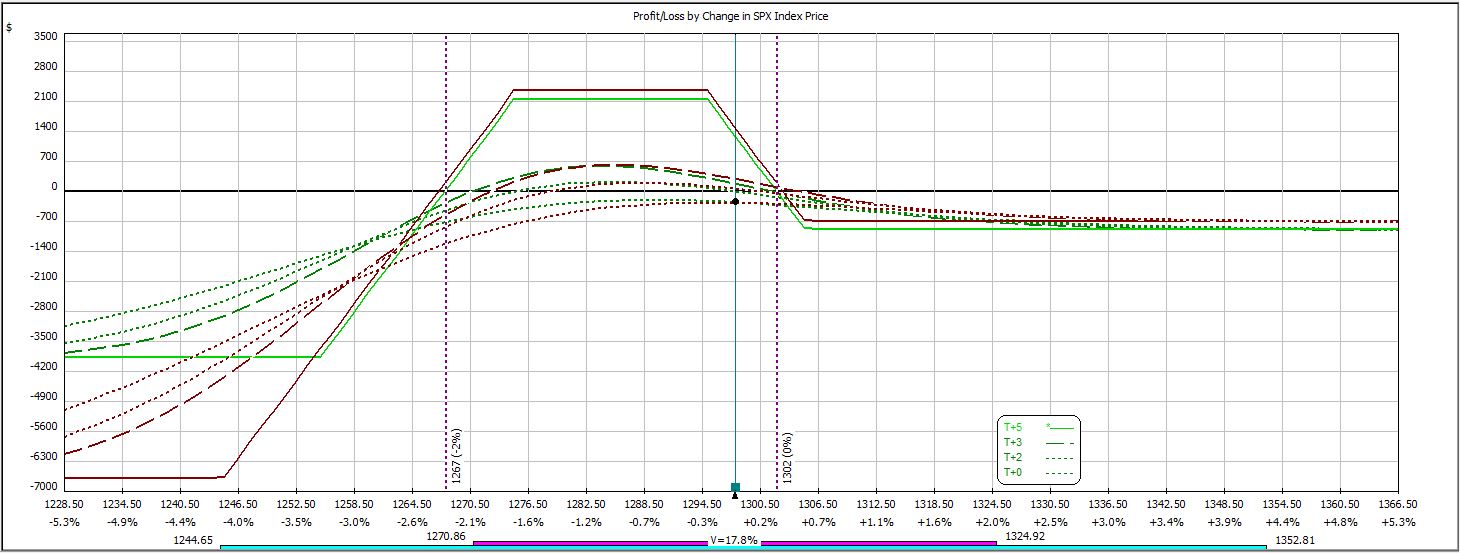
While rolling the short puts higher does bolster profit potential, the profit target is so much less than the max potential profit at expiration that little benefit may be realized. The disadvantage to rolling up the short puts is a faster losing trade if the market reverses and lower.
The weekly iron butterfly is 7-4 thus far.
Categories: Backtesting | Comments (0) | PermalinkWeekly Iron Butterfly Backtest (Part 11)
Posted by Mark on July 12, 2013 at 06:10 | Last modified: August 5, 2013 11:30In this blog series, I’m backtesting the weekly option trade described here.
Week 10′s trade begins like this:
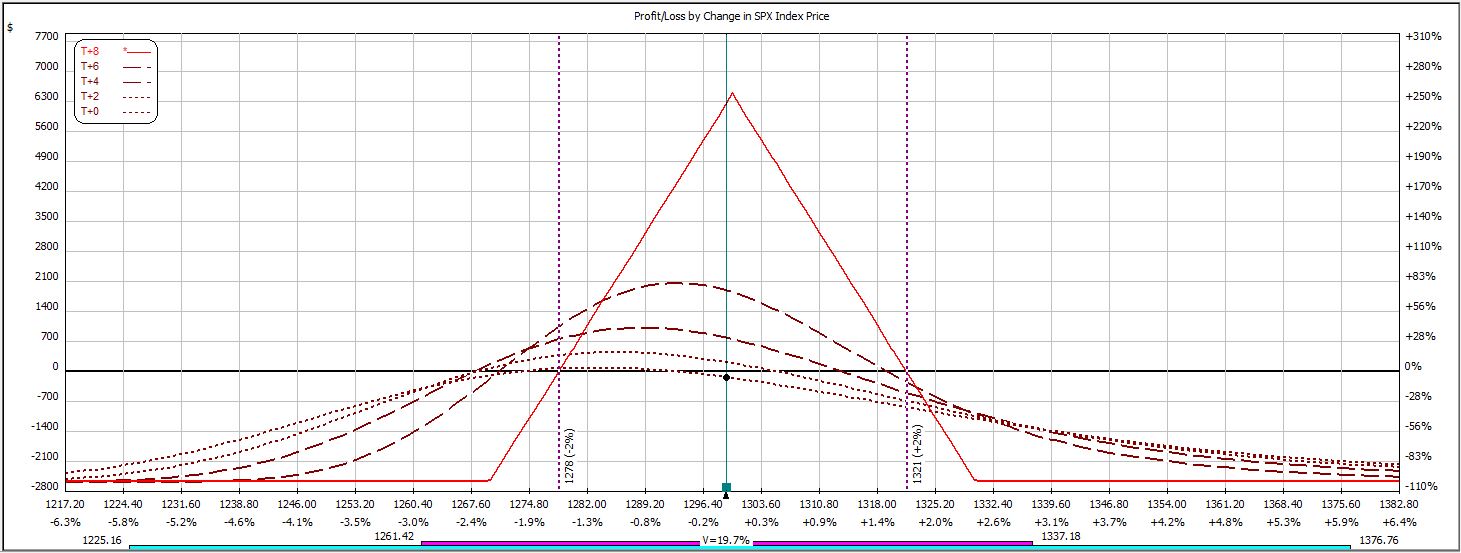
This trade closed in less than two hours at a profit target:
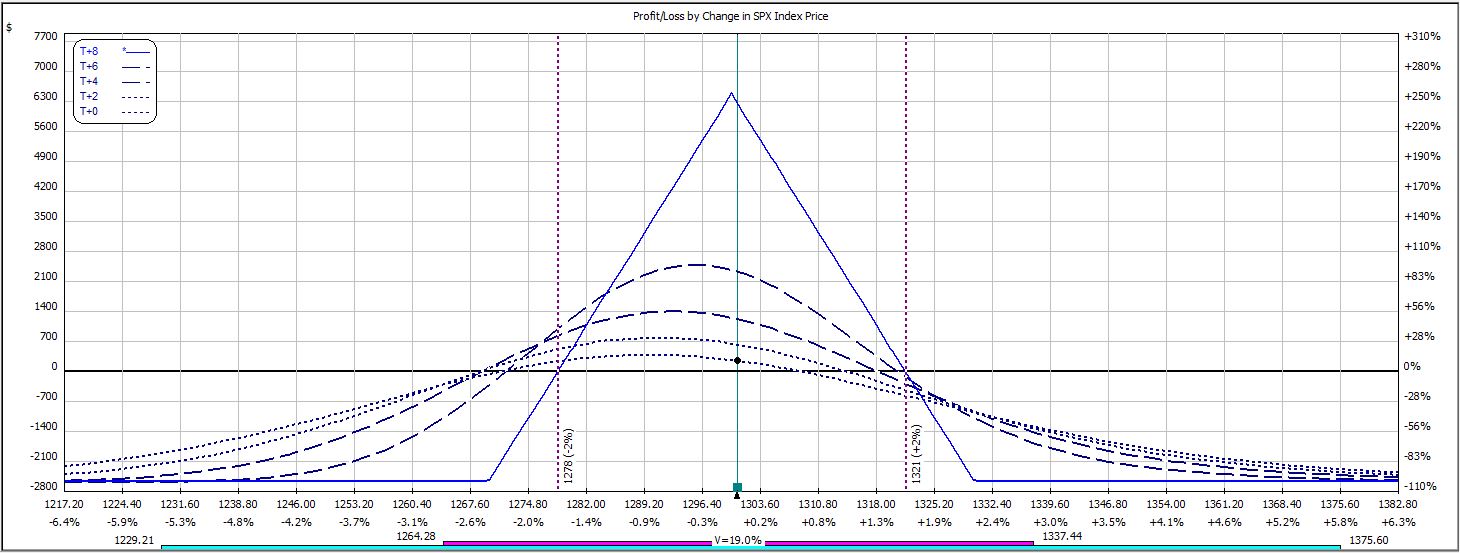
I’ve heard a number of traders talk about placing these weekly iron butterflies on Thursday and getting out before the weekend. This is the first time I have actually seen it in backtesting.
What happened?
The market was down 1.5% early on Thursday and IV had spiked 2.5%. The market traded sideways for the next 90 minutes and IV decreased 0.7%. This was enough to reach the profit target.
The margin requirement on this trade was only $2,556. The IV spike led to decreased cost of the butterfly spread. While getting out profitably in hours seems like a great thing, the downside is the lowest profit target seen thus far.
The trade has now won six times and lost four. Since the average loss outpaces the average win by a factor more than two, I am not ready to trade this with real money. We’ll see in time if the three consecutive losers were more the rule or the exception.
Categories: Backtesting | Comments (0) | PermalinkWeekly Iron Butterfly Backtest (Part 10)
Posted by Mark on July 10, 2013 at 05:21 | Last modified: August 5, 2013 10:34In this blog series, I’m backtesting the weekly option trade described here.
Week 9′s trade begins like this:
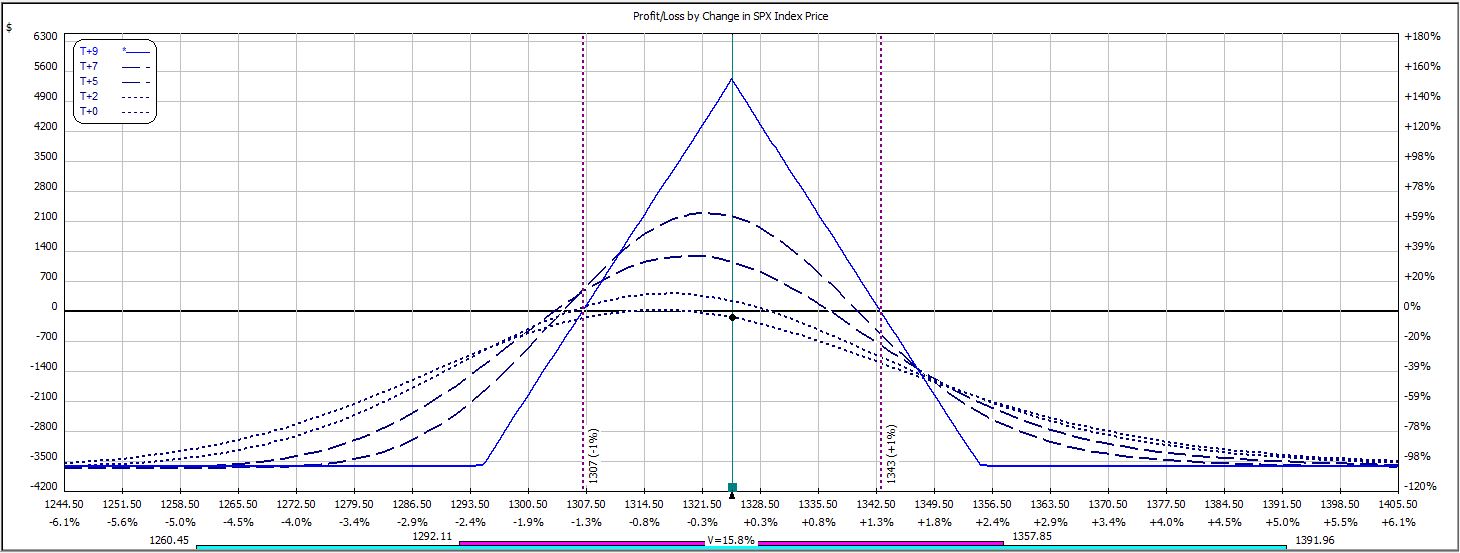
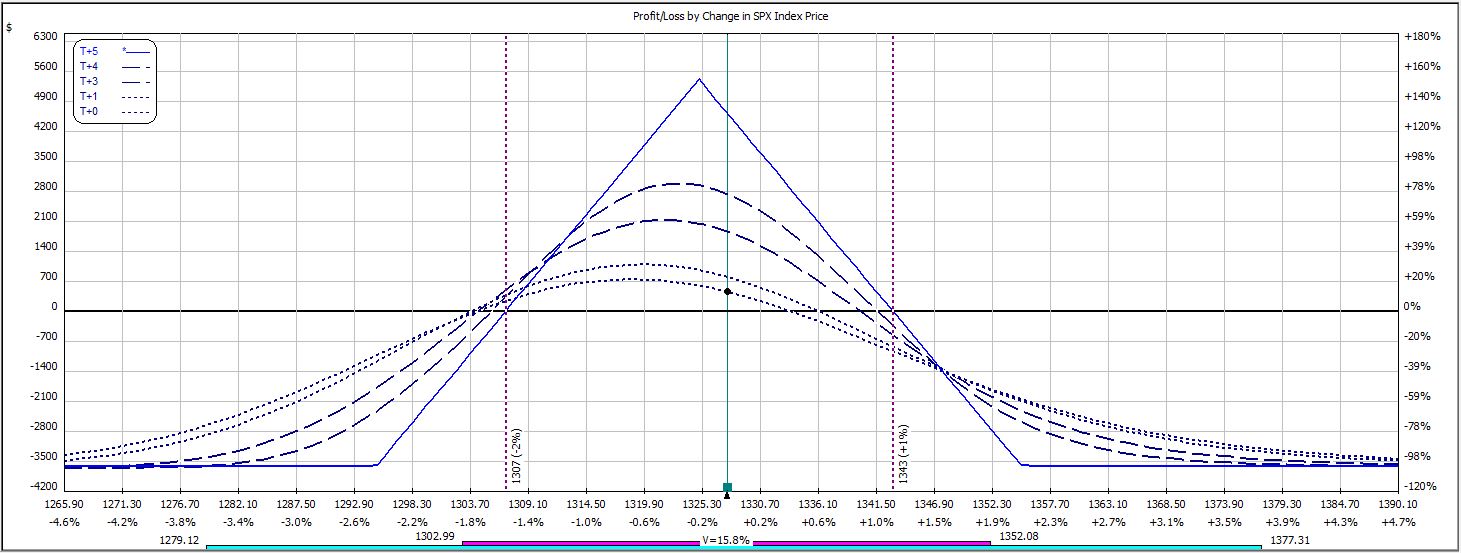
The market rallied and then pulled back over the next couple of days. While a downside adjustment point was hit on Day 2, I did not adjust because the trade was profitable:
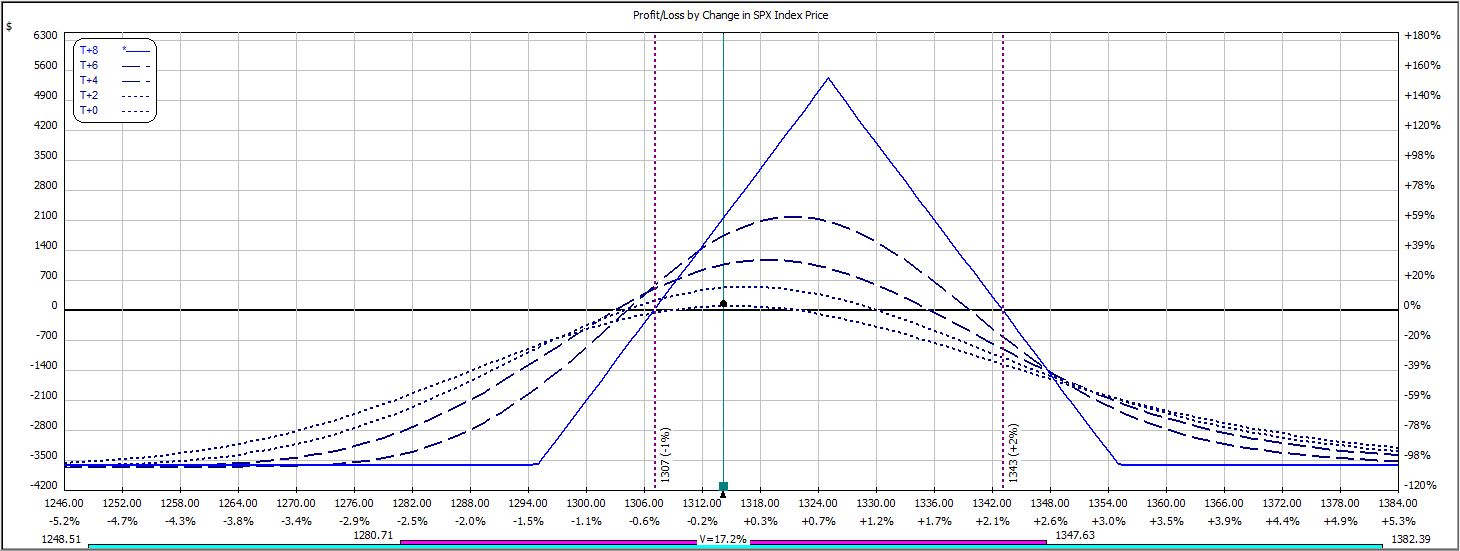
The profit target was hit on Monday morning:
P/L on Day 1 ranged from -$372 to -$81.
P/L on Day 2 ranged from +$117 to +$285.
On Day 5 (nothing happened over the weekend), the trade was closed for a profit of $459 on a margin requirement of $3,618, which is a return of 12.7%.
This trade has won in five out of nine weeks thus far.
Categories: Backtesting | Comments (0) | PermalinkWeekly Iron Butterfly Backtest (Part 9)
Posted by Mark on July 9, 2013 at 05:48 | Last modified: August 5, 2013 09:03In this blog series, I’m backtesting the weekly option trade described here.
Week 8′s trade begins like this:
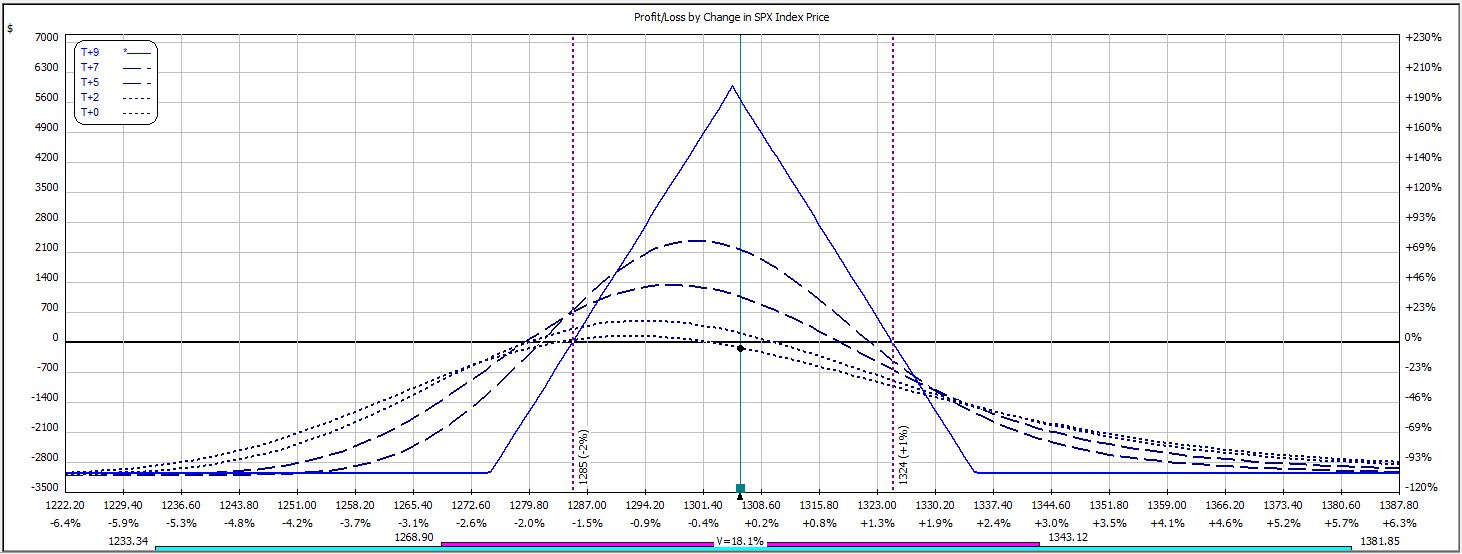
The market rallied to the first adjustment point on the next day:
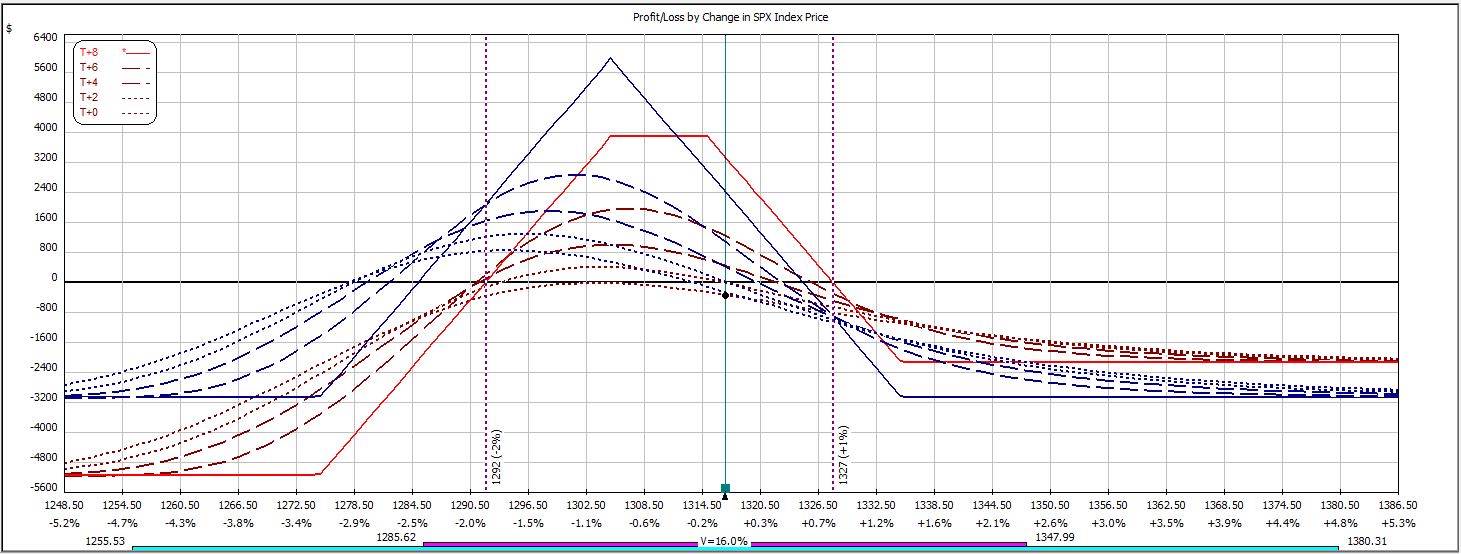
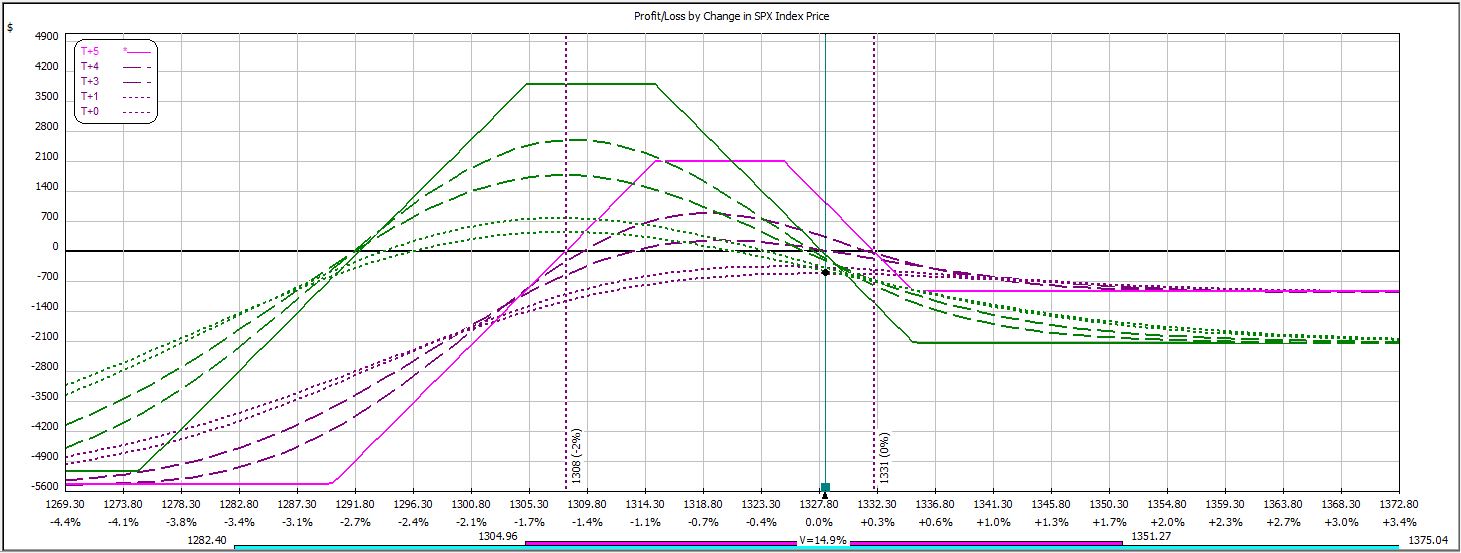
The rally continued into Monday when the second adjustment point was hit. Not only did I roll up the short calls 10 points, I also rolled the short and long put up 25 and 30 points, respectively. This adjustment, shown in pink, preserved profit potential for the trade as well as managing downside margin:
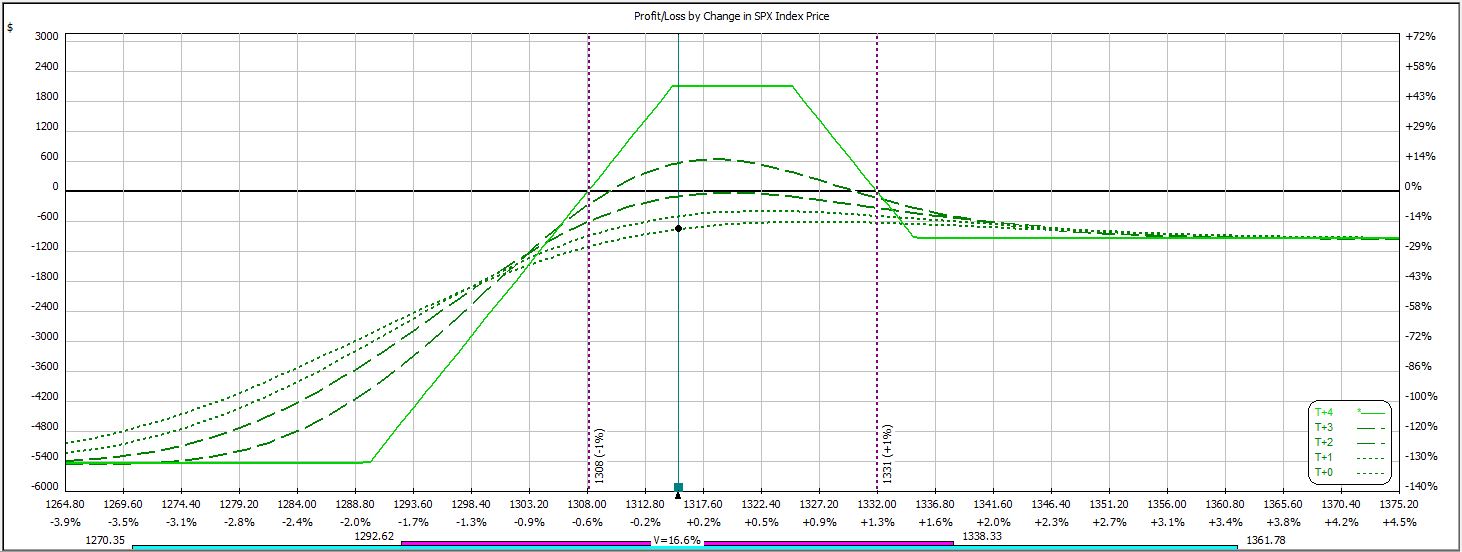
When the market pulled back on the next trading day, max loss was hit:
P/L on Day 1 ranged from -$285 to +$24.
P/L on Day 2 ranged from -$519 to -$345 on an adjusted margin requirement of $5,136.
P/L on Day 5 (nothing happened over the weekend) ranged from -$606 to -$537 on an adjusted margin requirement of $5,433.
Trade was closed on Day 6 for a loss of $738, which is 13.6%.
This backtested trade has now won and lost four times each.
Categories: Backtesting | Comments (0) | PermalinkWeekly Iron Butterfly Backtest (Part 8)
Posted by Mark on July 3, 2013 at 04:14 | Last modified: August 2, 2013 14:20In this blog series, I’m backtesting the weekly option trade described here.
Week 7’s trade begins like this:
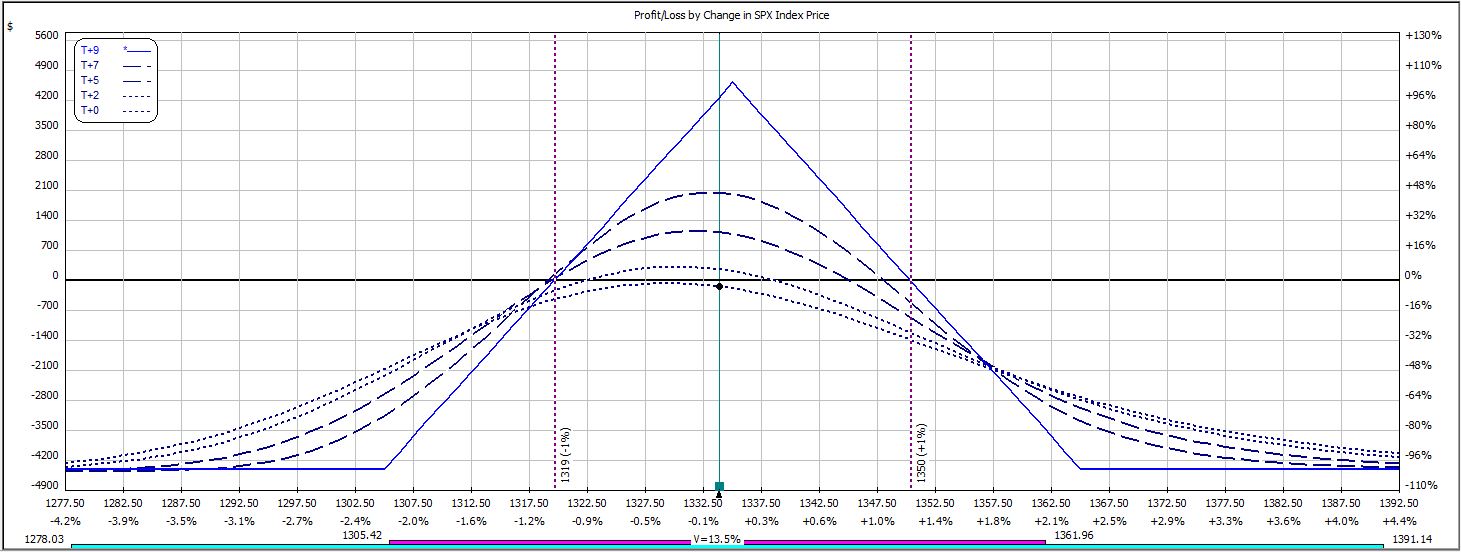
The trade closed just before the market sold off markedly:
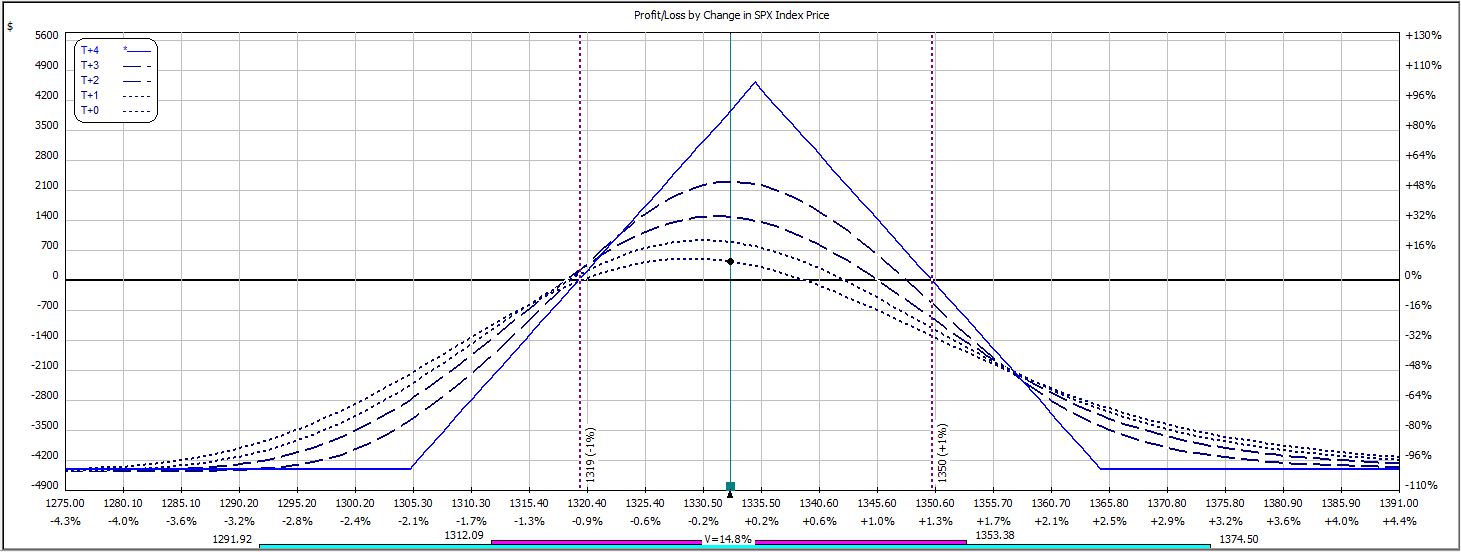
P/L on Day 1 ranged from -$399 to -$114.
P/L on Day 2 ranged from -$75 to +$318.
Trade closed on Day 5 (nothing happened over the weekend) for a profit of $444, which is 10.1% on $4,419 initial margin.
In backtesting, this trade has now won four times in seven weeks.
Categories: Backtesting | Comments (0) | PermalinkWeekly Iron Butterfly Backtest (Part 7)
Posted by Mark on July 1, 2013 at 10:40 | Last modified: August 2, 2013 10:52In this blog series, I’m backtesting the weekly option trade described here.
At inception on Week #6, the trade looked like this:
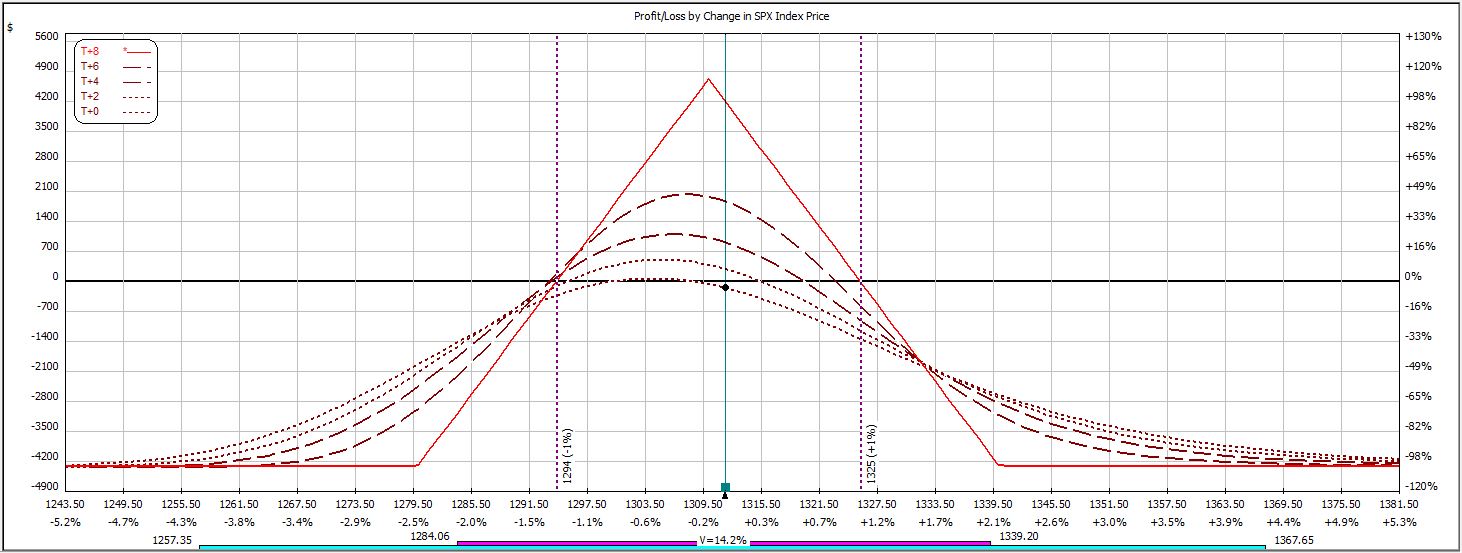
The P/L ranged from -$144 to -$837 on this day.
On Day #2, max loss was hit:
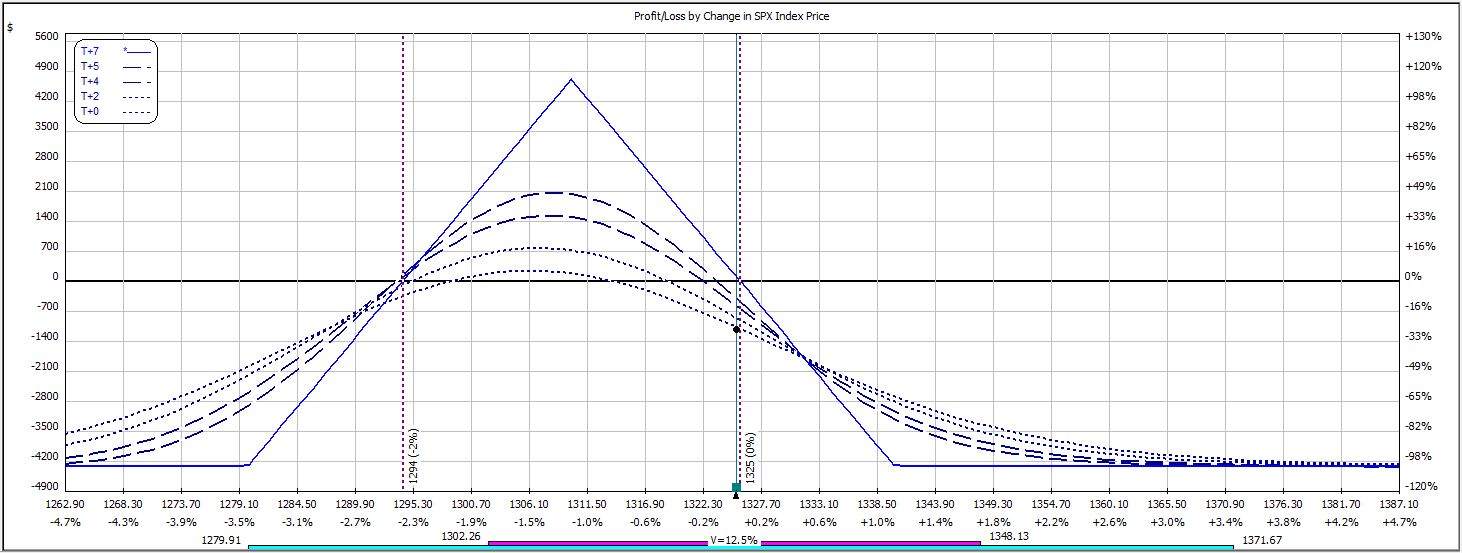
The market only had to rally 14 points to force a 26% loss on the initial margin of $4,311.
In the first six weeks of this backtest, we have seen three wins and three losses. That only tells half the story, however. The average win has been $515 versus an average loss of $1,032. That, my friends, is a recipe for disaster!
Time will tell whether these early tendencies persist.
Categories: Backtesting | Comments (0) | PermalinkWeekly Iron Butterfly Backtest (Part 6)
Posted by Mark on June 28, 2013 at 04:16 | Last modified: August 2, 2013 10:37In this blog series, I’m backtesting the weekly option trade described here.
Week #5 is a loser. At inception, the trade looked like this:
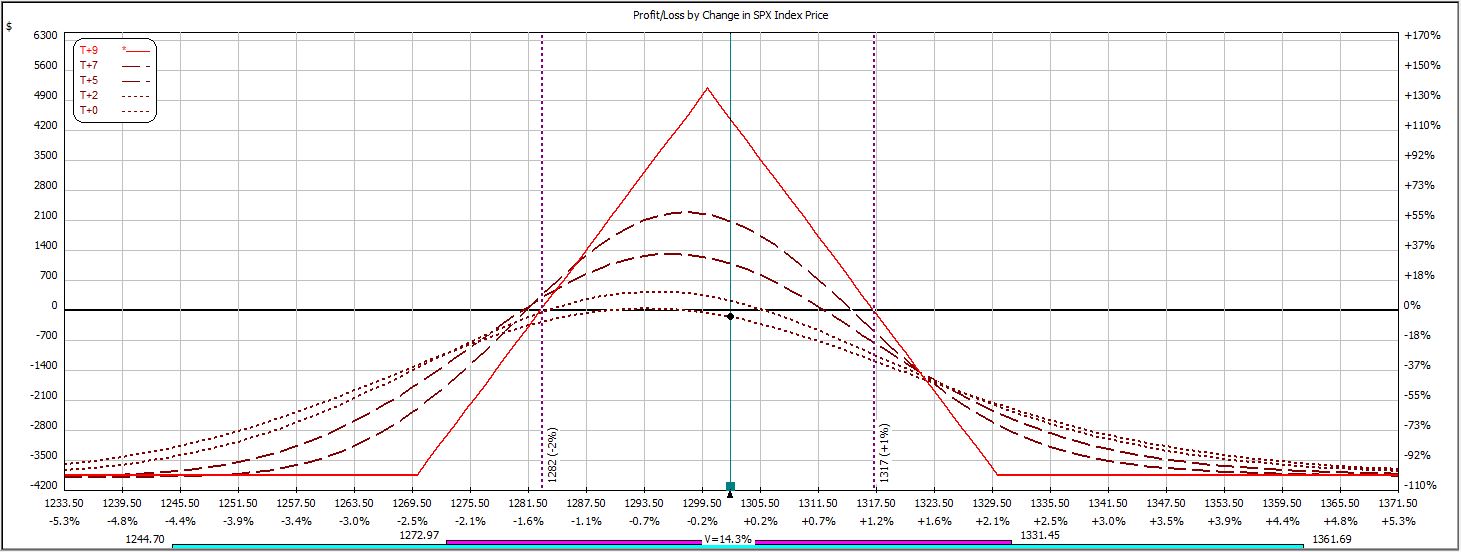
The market rallied 15 points to force an adjustment on Day #5. Shown in purple, I rolled the short calls up:
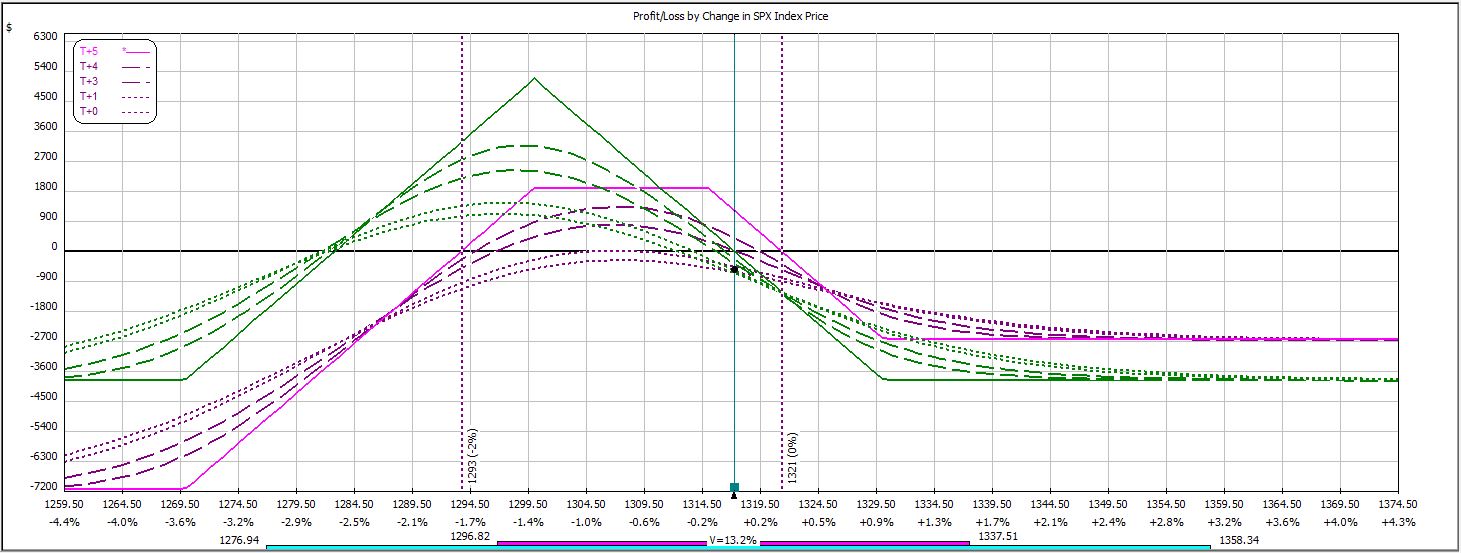
As the uptrend continued, max loss was hit soon after:
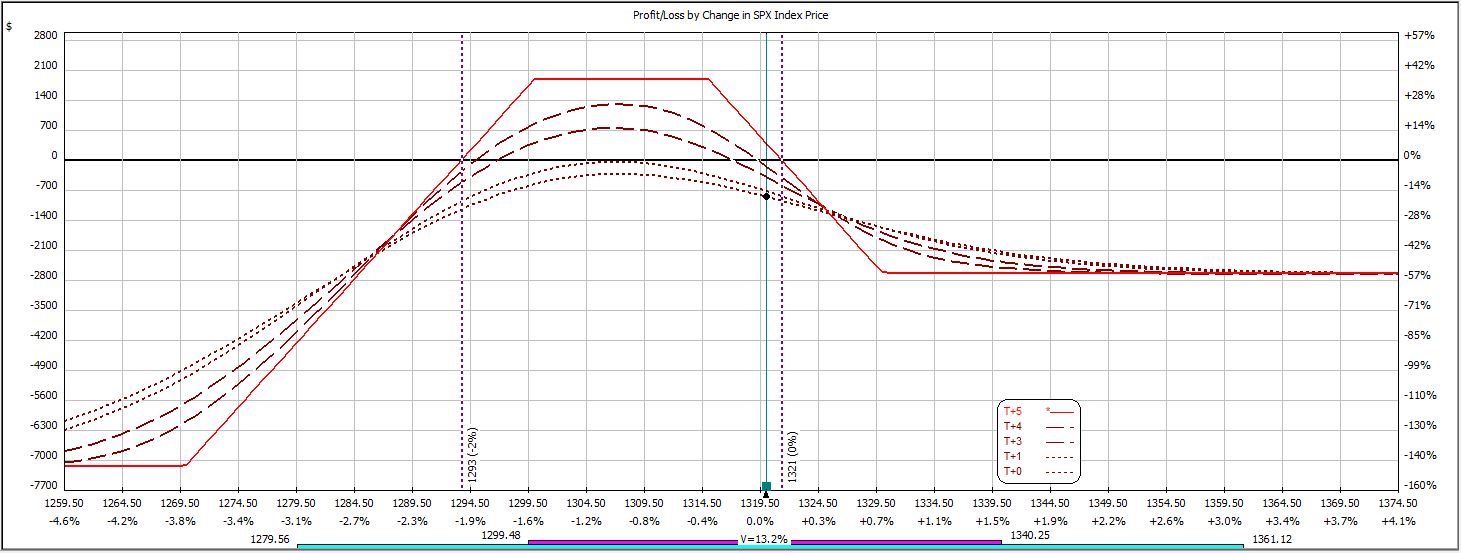
P/L on Day #1 ranged from -$177 to +$87 on $3,858 margin requirement for three contracts.
P/L on Day #2 ranged from -$90 to +$264.
P/L on Day #5 (nothing happened over the weekend) ranged from -$582 to -$837 (max loss), which is a loss of 11.7% on an adjusted margin requirement of $7,137.
In back-to-back weeks I have now seen sharp whippiness and strong trending cause this trade to lose. The win-loss record stands at 3-2.
Categories: Backtesting | Comments (0) | PermalinkWeekly Iron Butterfly Backtest (Part 5)
Posted by Mark on June 26, 2013 at 05:55 | Last modified: August 1, 2013 10:21In this blog series, I’m backtesting a weekly option trade described here.
Week #4 presents the first loser of the bunch. At inception, the trade looked like this:
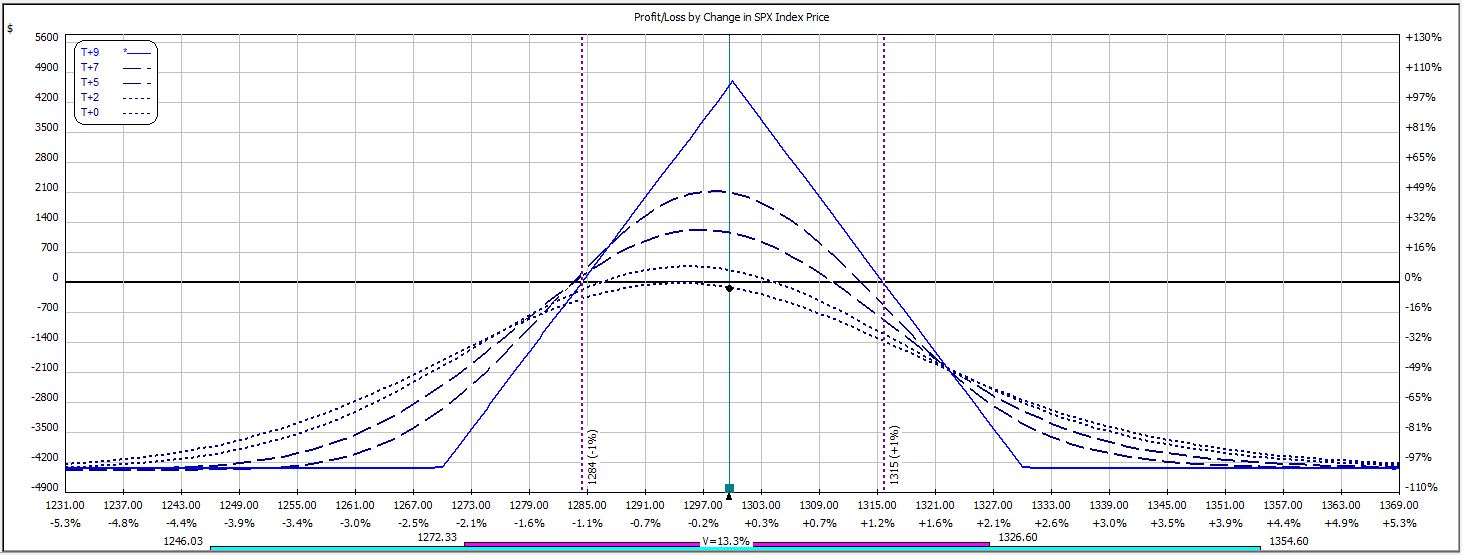
The market tanked on Day #2 forcing two adjustments. Adjustment #1 involved rolling down the short put 10 points. This is seen in blue:
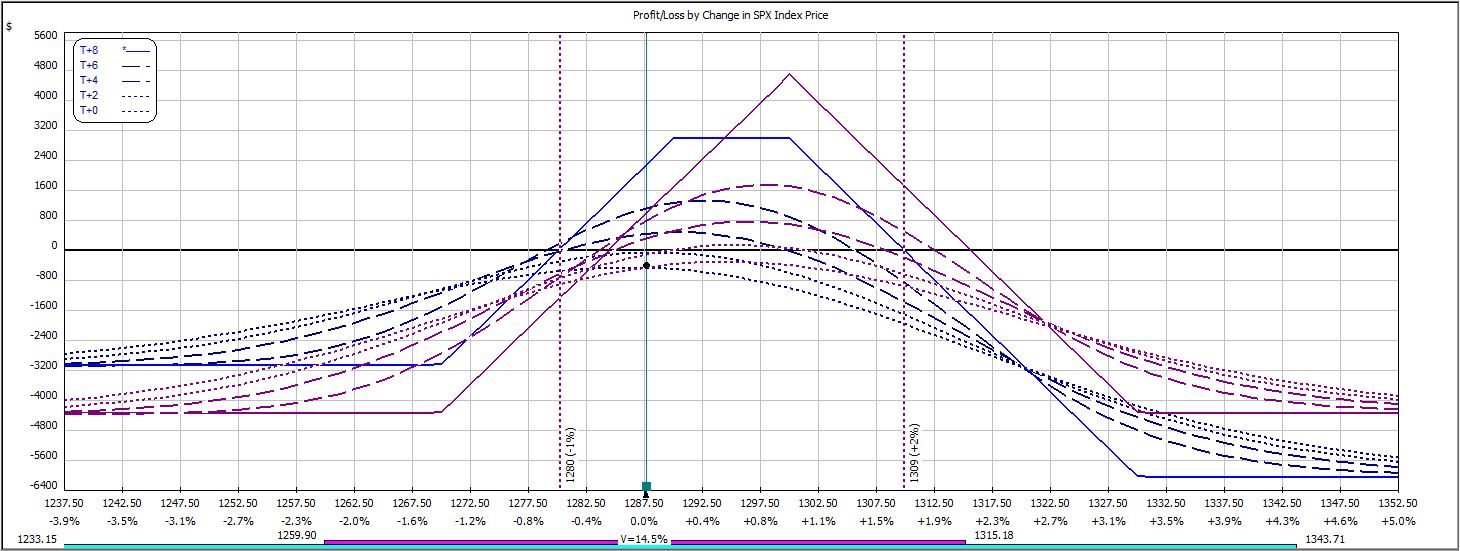
Adjustment #2 involved rolling down the put spread, rolling the short call 10 points closer, and rolling the long call 15 points closer. This is seen below in green:
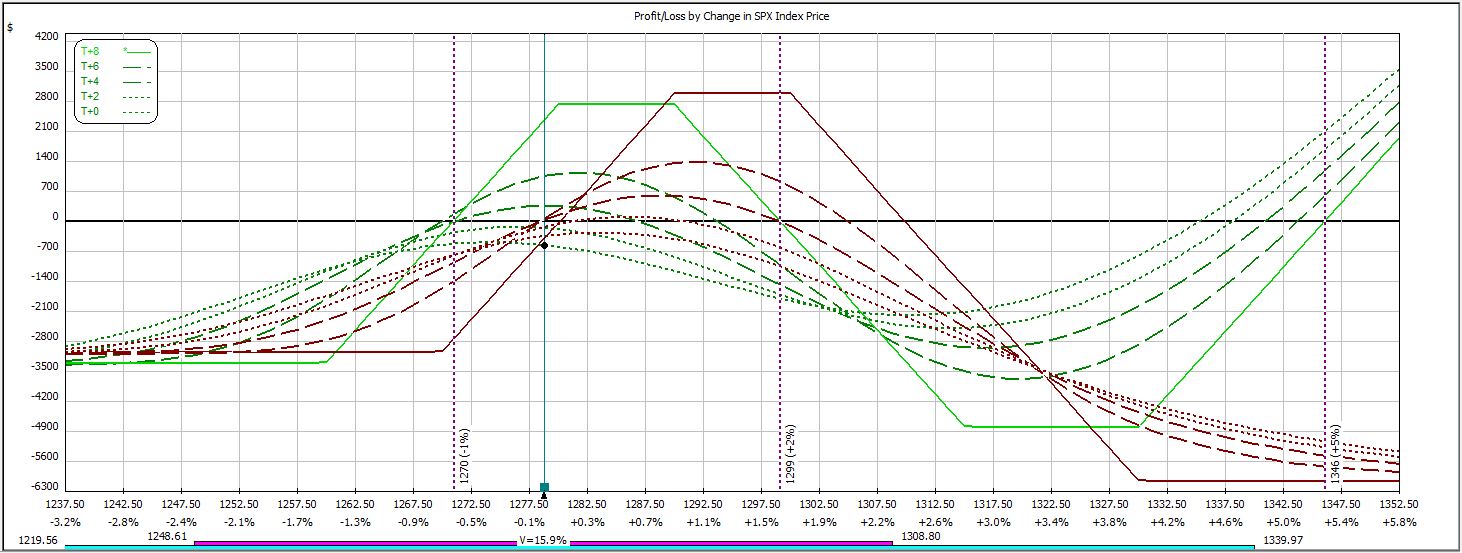
On the put side, although rolling the vertical rather than the short option alone increases downside risk, I had already cut downside risk with the previous adjustment. The net effect would leave downside risk roughly equivalent (in fact it was $3,276, which is still less than the original margin requirement).
On the call side, I rolled the short option closer to recoup some potential profit in the trade. I rolled the long option even closer to manage upside risk.
On Day #6, the market gapped higher forcing me to exit at max loss:
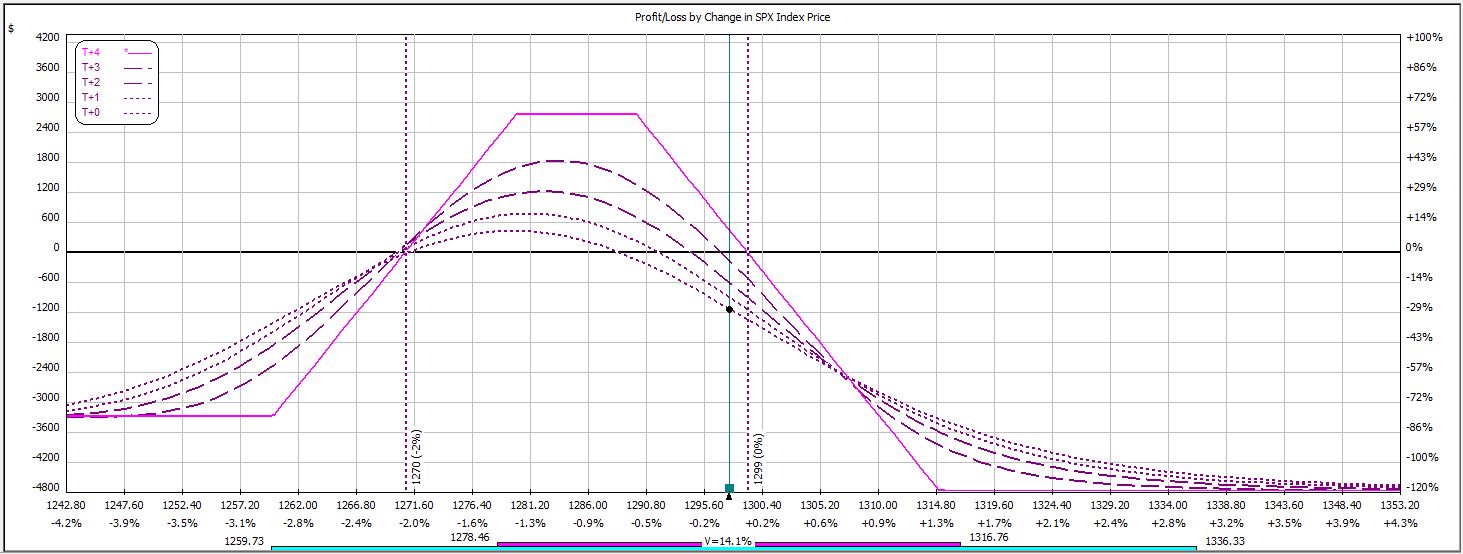
P/L on Day 1 ranged from -$387 to -$69.
P/L on Day 2 ranged from -$864 to +$102 and the margin requirement increased from $3,915 to $6,057 on three contracts.
P/L on Day 5 (nothing happened over the weekend) ranged from -$405 to -$234 on margin of $4,776.
Trade closed on Day 6 with a loss of $1,137, which is -18.8% on max margin.
Relative to the first three weeks, the market was very whippy during the short time period. This trade will not win in the face of such price action:
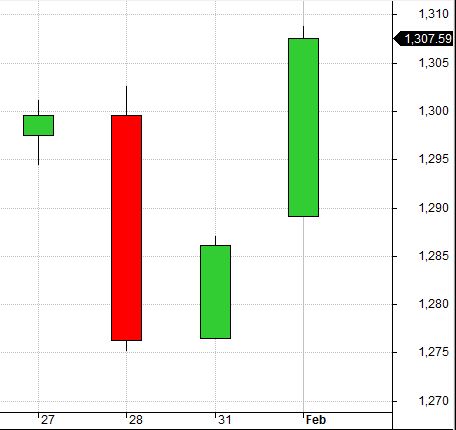
The “$6M question” is whether this is the exception or the norm.
Categories: Backtesting | Comments (0) | PermalinkWeekly Iron Butterfly Backtest (Part 4)
Posted by Mark on June 24, 2013 at 07:42 | Last modified: August 1, 2013 07:57In this blog series, I’m backtesting a weekly option trade described here.
The third week required an adjustment. At inception, the trade looked like this:
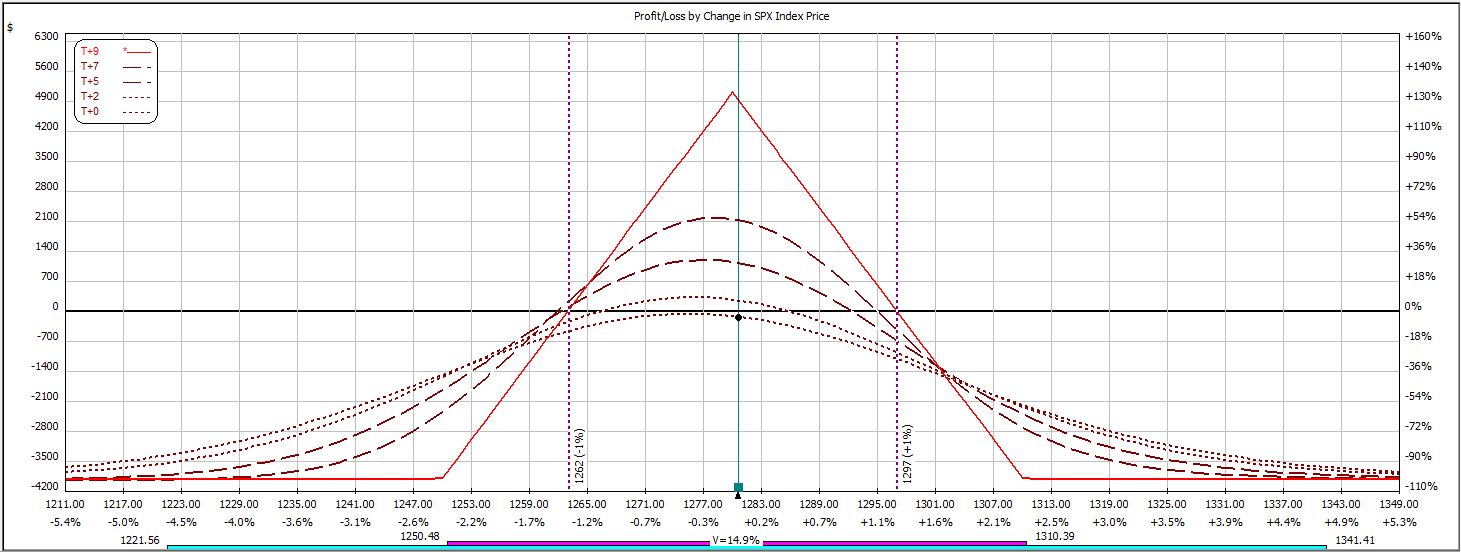
The market was 10 points higher on Day 2, which required me to roll up the short call:
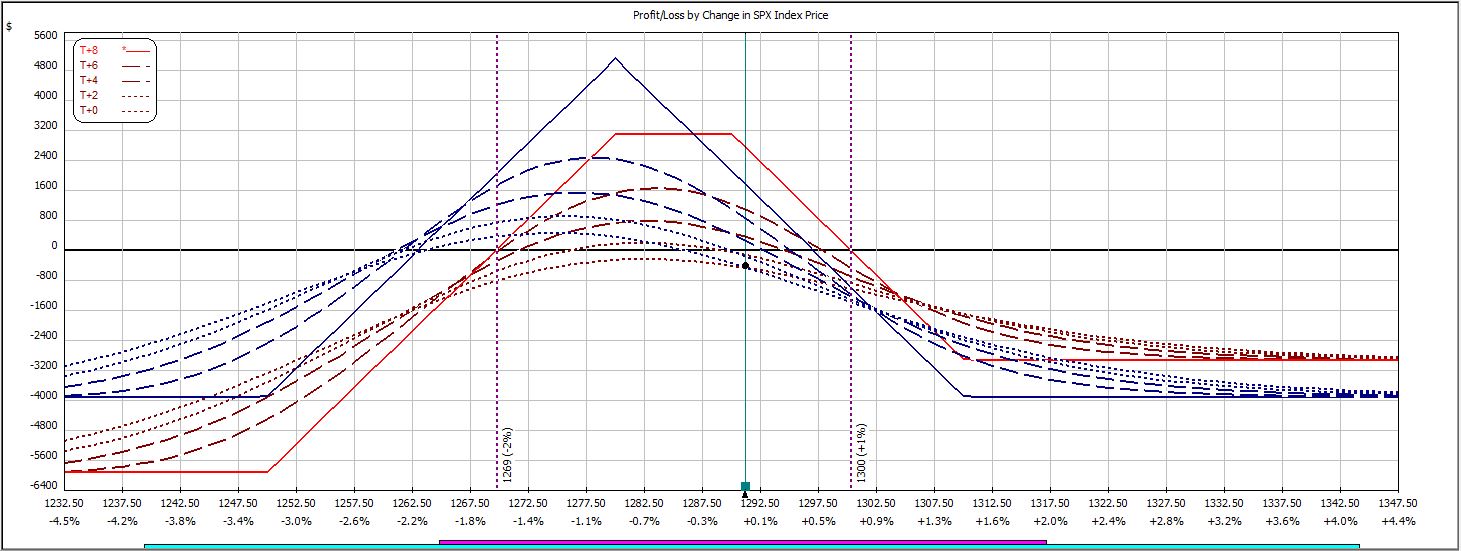
A discussion may be had whether to roll up the short call or the short call vertical spread. The former cuts net position delta while the latter does not increase risk as much. Although the former increase risk (margin requirement) more, that risk is on the profitable side of the trade. If the market continues to trend then the risk is actually less. This may be seen in the above graph that shows the adjusted trade superimposed on the original trade.
Which adjustment is better? That is a very difficult question to answer that would require extensive backtesting. I may be able to do that eventually for now I continue one week at a time.
P/L on Day 1 ranged from -$144 to +$39.
P/L on Day 2 ranged from -$426 to +$189 and the margin requirement increased from $3,915 to $5,931 on three contracts.
P/L on Day 5 (nothing happened over the weekend) ranged from +$72 to +$216.
P/L on Day 6 ranged from $237 to $447, which is when I closed the trade:
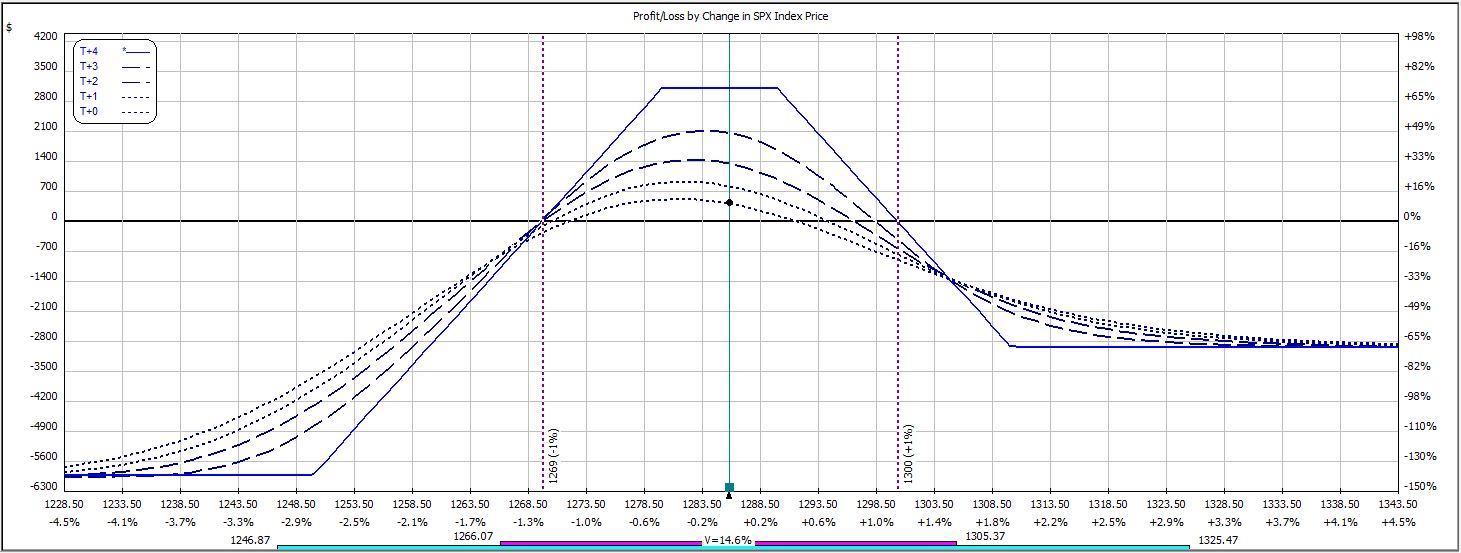
On the increased margin, return on investment was 7.5% on this trade.
Another question for debate is what to do if the market returns to its original price after rising or falling 10 points and forcing an adjustment: undo the adjustment or let it ride? This is another question that cannot be answered yet. The current trade does suggest, however, that adjustment requires staying in the trade longer to reach profit target. That makes theoretical sense.
Thus far, this trade has three wins and zero losses.
Categories: Backtesting | Comments (0) | PermalinkWeekly Iron Butterfly Backtest (Part 3)
Posted by Mark on June 21, 2013 at 07:09 | Last modified: August 1, 2013 07:40In this blog series, I’m backtesting a weekly option trade described here.
The second week was flawless. At inception, the trade looked like this:
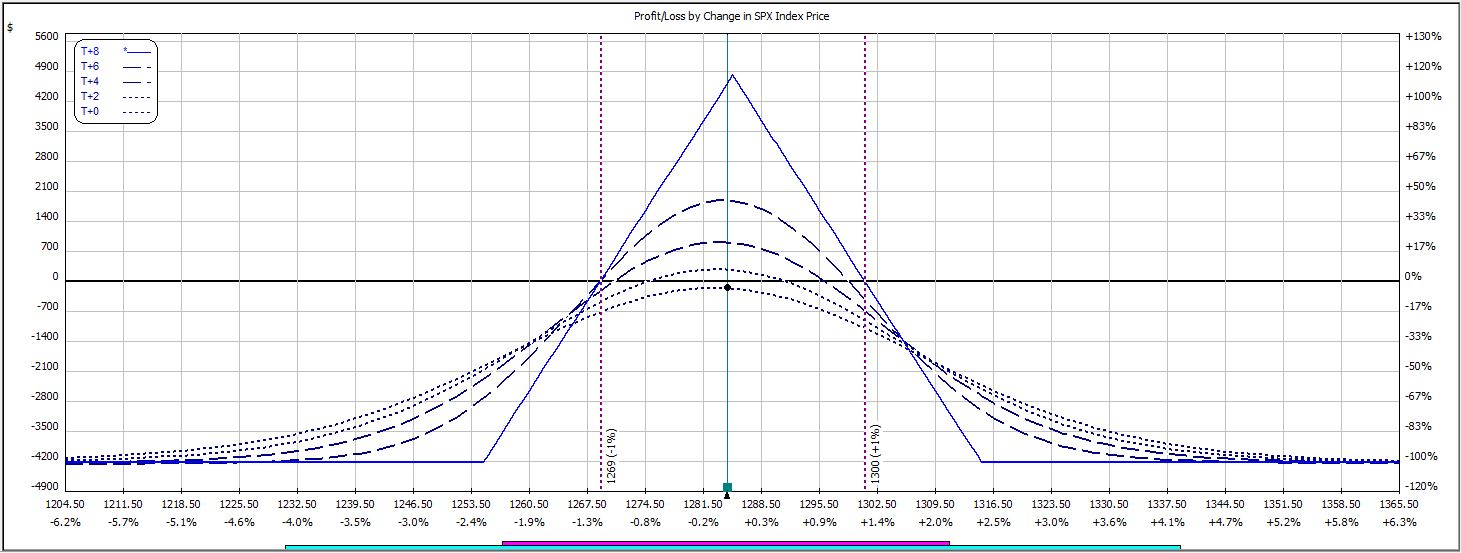
P/L on Day 1 ranged from -$114 to +$78.
P/L on Day 2 ranged from +$87 to +$324.
P/L on Day 6 (nothing happened over the weekend or on MLK day) was $570, which is when I closed the trade:
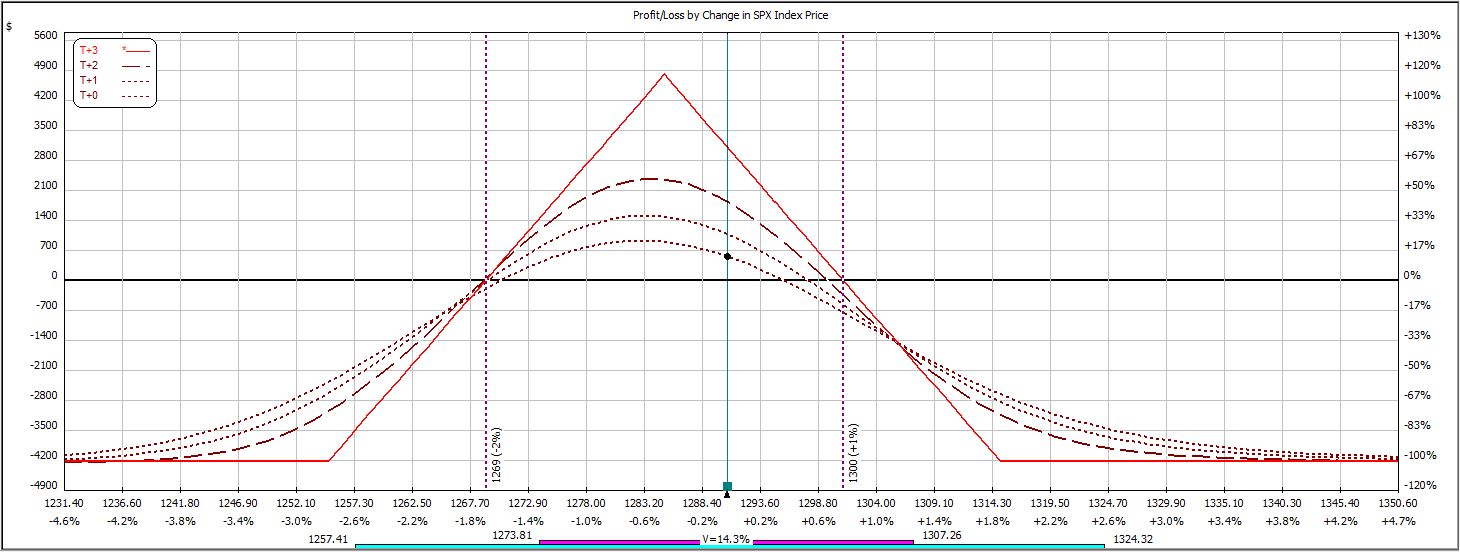
No adjustments were required for this trade.
Margin remained constant at $4,230 for three contracts. Return on investment was 13.5%.
Thus far, this trade has two wins and zero losses.
Categories: Backtesting | Comments (0) | Permalink